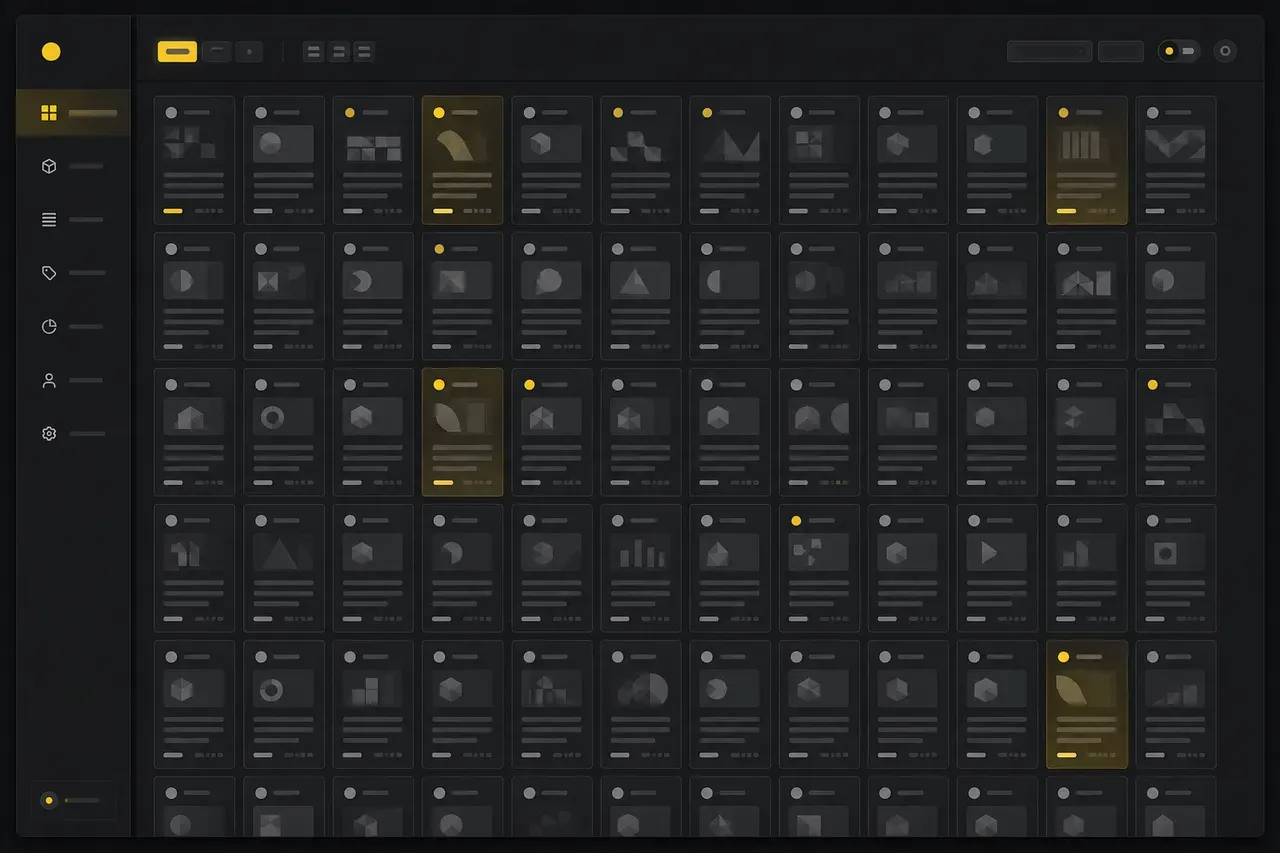
Manual listing tracking breaks down when volume exceeds what one head can remember: beyond 100-150 active listings spread across several marketplaces, re-entering data platform by platform, the risk of overselling and scattered messages turn reselling into a full-time job. To hold 200, 300 or 500 listings and more without exhausting yourself, the solution is not to go faster by hand; it is to change method: organised stock, repeatable processes, and centralisation of tasks that cost nothing one by one but, multiplied by several hundred items, eat up whole days.
The symptom comes back with almost every reseller who grows: what worked very well at 30 listings becomes unmanageable at 200. Not because the product has changed, but because management time does not grow at the same pace as stock, it explodes. Here are the levers that make the difference between putting up with your volume and steering it.
Why does manual tracking break down beyond 100-150 listings?
Manual tracking relies on the memory and vigilance of a single person, two resources that do not scale with the number of items. Past about a hundred active listings across several platforms, repeated re-entry, forgotten delistings and scattered messages objectively take more time than selling itself.
Three frictions come up systematically with resellers who scale:
- Multi-platform re-entry. Each marketplace has its own format (square photos on one, any format on another), its own tone (relaxed here, technical there) and its own required fields. Recreating the same listing by hand on 3 to 5 platforms, item after item, is the task that uses the most time at high volume.
- Overselling through a forgotten delisting. An item sold on one marketplace must disappear immediately from the others. At 20 listings, a regular check is enough. At 300, it is statistically impossible to monitor everything in real time, and the incident eventually happens.
- Messages and orders scattered around. Vinted, eBay, Leboncoin, Vestiaire Collective, Etsy: each platform has its own messaging, its own order tracking, its own app. Replying quickly to a potential buyer becomes a juggling act between five screens instead of a single reflex.
The result: profitability itself becomes invisible. Without a consolidated view, it is hard to know which platform performs best, which item is sitting in stock, or what margin you really make once each marketplace's fees are deducted.
How do you organise your stock so it holds at 300 or 500 listings?
Stock organisation must come before automation, not after it. Each item gets a unique identifier (SKU) as soon as it enters stock, a simple category and a referenced physical location: without this foundation, no tool can track several hundred pieces properly.
In practice, three habits structure a stock that stays manageable at volume:
- A unique identifier per item, assigned on receipt. A label or a small number stuck on the item is enough: this number becomes the piece's reference everywhere you track it afterwards, from the storage box to the live listing.
- Logical categorisation: type of garment, season, brand, size. This classification allows group actions (refresh (relist) all summer items in September, lower the price of a whole batch that is stagnating) instead of handling each listing in isolation.
- A referenced physical location (a box or shelf number linked to the SKU) to find the item within seconds when it is time to ship it, without rummaging.
This basic discipline, documented by tools specialised in stock management for resellers such as VintedCRM, is what separates a stock that holds at 500 items from a stock that becomes a maze past 150.
How do you industrialise the creation and publishing of your listings?
Handling listings in batches rather than one by one mechanically divides the time spent on each. A title template, a reusable description structure and a grouped photo session turn a repetitive task into a quick, reproducible process, and one you can delegate if you ever hire.
Three practices change the rhythm in concrete terms:
- A grouped photo session, rather than one per item as you go: same background, same light, several pieces in a row.
- A reusable title template (brand, model, colour, size, condition) that works whatever the platform, to be adapted afterwards to the tone specific to each.
- A standard description body (material, measurements, flaws) that you adjust on the surface depending on the platform, rather than starting from scratch on each listing.
- Grouped publishing sessions (one or two dedicated slots a week) rather than a continuous flow that pulls you away from your current task each time a new item is ready.
How do you avoid overselling when you manage several marketplaces?
Automatic stock sync is the number one lever for scaling up: as soon as an item sells on one platform, it must disappear instantly from the others. Without automation, it is a race against the clock that you always end up losing beyond a certain volume.
This is precisely the subject of crosslisting: publishing everywhere multiplies your visibility, but exposes you to the risk of selling the same item twice if stock is not a single source of truth across platforms. At low volume, a regular manual check limits the damage. At 300 or 500 listings, it is no longer a question of discipline: it is structurally impossible to monitor by hand in real time, which makes automated sync the real tipping point between "I sell on several platforms" and "I manage real volume calmly".
How do you centralise messages, orders and shipments?
Each marketplace has its own messaging and its own order tracking. Beyond a few dozen sales a month, juggling three to five apps wastes time and sometimes sales: a buyer who does not get a quick reply often turns to another listing.
This is a problem that volume resellers identify quickly: after-sales service and order tracking cannot stay scattered across so many different interfaces without an important question eventually getting lost. The structural answer is a single dashboard that brings together the messages and orders of all your platforms in one place, to handle each request once, at the right time, without switching tabs ten times a day.
How do you keep a clear view of your profitability at volume?
Past a certain threshold, a spreadsheet no longer keeps up. The indicators that really matter are the average basket per platform, the net margin per item (selling price minus purchase cost, platform fees and shipping costs) and the stock turnover rate, three figures that get lost quickly without centralisation when sales come from five different sources.
A fourth indicator deserves tracking upstream, from the moment of purchase: the keep rate, that is, the share of pieces actually put up for sale out of the total bought in a batch (wholesaler's bale, pallet, car boot sale lot). A keep rate of 40% on a purchase at €8/kg means each resalable piece cost you €20 to acquire before even counting sorting time, a calculation that completely changes the real profitability of a sourcing channel compared with its displayed price per kilo alone.
This question of profitability often joins that of status: from a certain volume, you are probably buying stock with the aim of reselling it regularly, which moves your activity into the commercial field, taxable from the first euro. The subject deserves serious attention as soon as the activity becomes regular, and that is the whole point of the guide becoming a professional seller on Vinted. Having a consolidated view of your sales and margins, marketplace by marketplace, is also precisely what you need the day you fill in a tax return.
Which tools should you choose to scale without burning out?
The professional reseller market has structured itself around this precise pain. Tools like VintedCRM or DressKare concentrate on stock management, invoicing and accounting on the Vinted side; other solutions specifically target crosslisting and multi-marketplace stock sync. The right choice depends mostly on what costs you the most time today, and our comparison of the best crosslisting software in 2026 details the options according to your need.
If your main pain is precisely to publish once and let stock sync and order tracking run by themselves, that is exactly where StoFlow positions itself: you create your listing once (with a title and description that you can generate with AI from the product's attributes, rather than starting each time from a template filled in by hand), it is distributed to Vinted, eBay, Leboncoin, Vestiaire Collective and Etsy, stock syncs automatically when an item sells, and a single dashboard centralises orders, messages and profitability statistics by platform. The full method is detailed in selling on several marketplaces, and the Free plan up to 100 products lets you test the principle before moving to a higher plan if your volume keeps growing.
Do not try to automate everything from day one. The right progression remains the same at every scale: tidy your stock, standardise your listing creation, then automate sync and centralisation as soon as manual tracking starts costing you more time than it saves. It is this change of method (not an extra day of work) that lets you hold several hundred listings without giving up your evenings.